Reptiles, such as snakes, lizards, and tortoises, do well in deserts because they control their body temperature by gaining or losing heat from their surroundings.
By using external sources of heat, reptiles do not expend so much energy compared to birds and mammals, which generate heat within their bodies. So reptiles need less food, a scarce commodity in deserts. Using less energy also means that reptiles do not breathe as frequently as birds and mammals do, and this helps them conserve moisture.

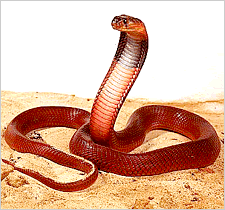
Spitting Cobra
The red spitting cobra spreads its hood before spitting venom to defend itself. When attacking its prey, mainly small reptiles and mammals, the cobra bites to inject venom. Like many desert snakes, it hunts at night to avoid the heat of the day.

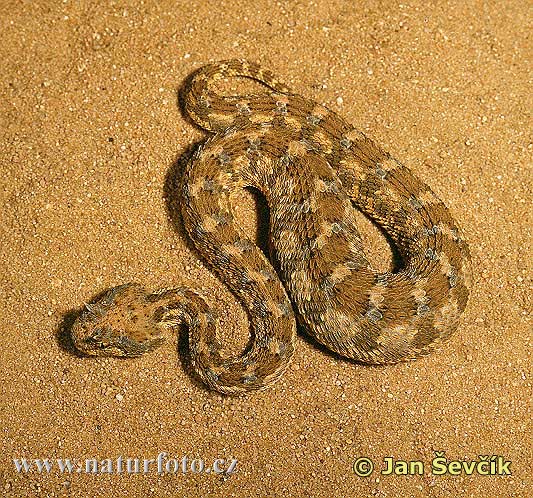
Desert horned viper

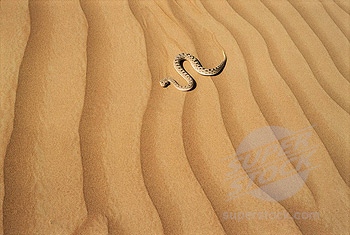
Desert horned viper2Desert horned Viper3

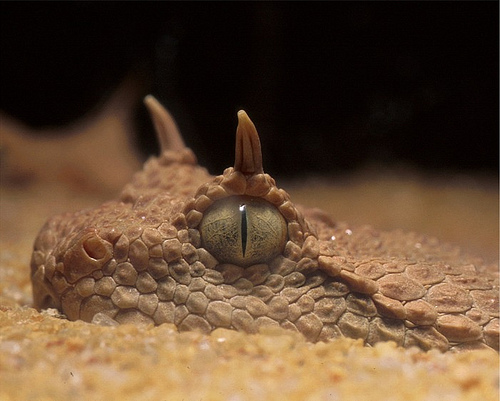
Desert horned viper
Cerastes cerastes is a venomous viper species native to the deserts of Northern Africa and parts of the Middle East. They often are easily recognized by the presence of a pair of supraocular horns, although hornless individuals do occur.
[ad#adsense-thin-article-ad]

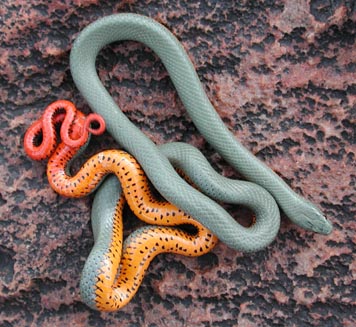
Ring-neck snake
Most ring-necked snakes are dark in color with a bright orange or yellow neck band and an orange-red belly. The ring-necked snake eats amphibians, lizards, snakes, and invertebrates, including worms. The ring-necked snake is often a communal nester, with each female laying a clutch of one to eighteen eggs in June or July. Eggs are laid underground, under rocks, or under logs, and hatch in about two months. Ring-necked snakes can be found near water in a variety of habitats. The ring-necked snake is a secretive nocturnal species seldom seen by the casual observer.

The black desert Cobra
Walterinnesia aegyptia. Color is black. Its venom is strong.
Habitat: Restricted to desert areas.
Distribution: Egypt, Syria, Lebanon, Iraq, Iran, Saudi Arabia, Kuwait, Jordan, and Palestine.

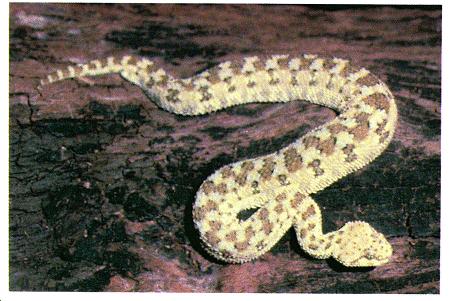
The Sand Viper
Usually uniformly very pallid, with three rows of darker brown spots
Characteristics: A very small desert dweller that can bury itself in the sand during the day’s heat. It is nocturnal, coming out at night to feed on lizards and small desert rodents. It has a short temper and will strike several times. Its venom is hemotoxic.
Habitat: Restricted to desert areas.

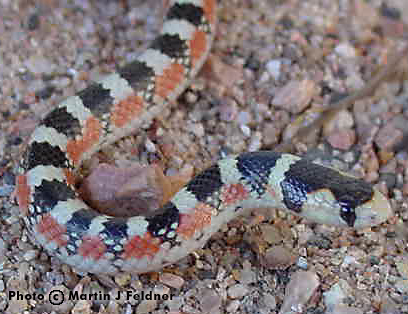
The desert hooknose snake

Desert king snake
Both the speckled king and the desert king snakes are glossy black (often dark brown), with a profusion of singular yellow spots. For the speckled king snake, nearly every scale on the back and sides has a yellow spot, but in the desert king snake the spots are confined to the sides and to narrow crossbands that pass, at intervals, from side to side across the spine.


 Black cobra snakes
 Black cobra snakes
 Black cobra snakes
 Black cobra snakes
 Black cobra snakes
 Black cobra snakes
 Black cobra snakes